
Finding competitor backlink is the easiest way to find the right backlinks that help to outrank your competitors. It is the fastest shortcut to building authority because your competition has already done the hard work for you.
This tactic is more critical now than ever. New data reveals that 76% of Google’s AI answers are pulled from pages that already rank in the top 10. By replicating your competitors’ best links, you don’t just beat them in the search results – you secure your spot in the AI overviews, too.
Ready to overtake them? Here is how to find those competitor links using different tools, both free and paid.
1. Identify your organic SEO competitors
Before you move to find links for your site, the first and most important step is to figure out who your competitors are. There are multiple competitors for a website but these are the two main types of SEO competitors you should consider:
A. Page-Level Competitors
These are websites that are ranking for the same keywords you’re targeting, especially on specific pages. But they might not belong to the same industry or niche as yours.
Example:
If you’re trying to rank for a keyword like “best SEO Chrome extensions,” then all the websites showing up on Page 1 of Google for that keyword are your page-level competitors.
Even if those websites are not selling SEO chrome extensions, they’re still competing with you for organic traffic on that particular keyword.
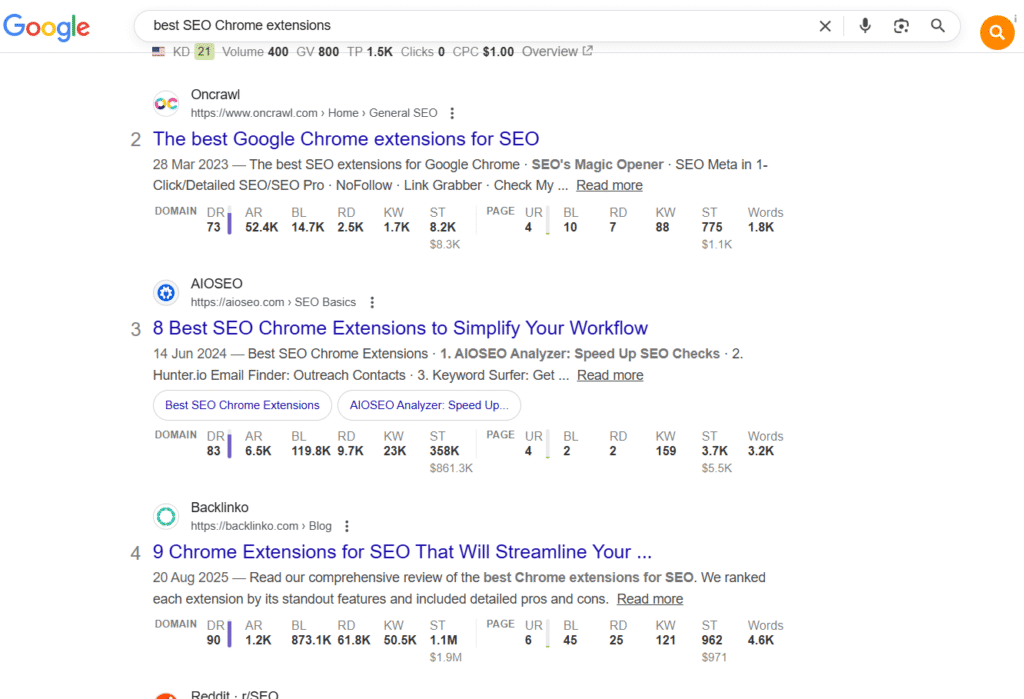
How can you find Page-level competitors?
One of the easiest ways to find page-level competitors is by searching your target keyword on the Google search engine. All the websites on Page 1 are your direct competitors for that specific keyword, even if they’re from a different niche.
You can also use tools like Ahrefs or SEMrush. Just enter your keyword in any tools, and they’ll show you the top-ranking pages.
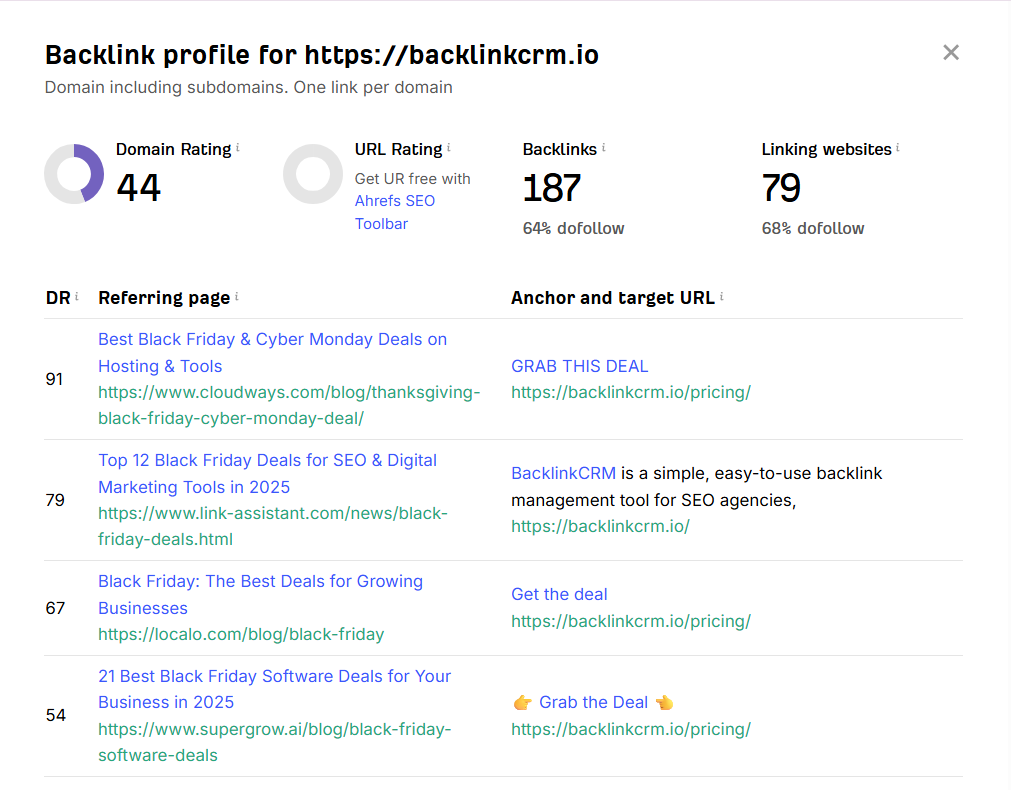
For more in-depth insights you can also try Ahrefs’ free backlink checker tool to see where those pages are getting backlinks from and the quality and relevance of those backlinks. This makes it easier for you to spot link-building opportunities for your own page.
B. Domain-Level (Direct) Competitors
These are websites that are selling the same product and services and target a similar audience. They may not be ranking for the exact same keywords, but their overall site content overlaps with your other business keywords.
These competitors are more relevant when it comes to long-term organic growth planning.
Example:
If you run an SEO agency, other SEO agencies targeting similar keywords across their site (like tools, tips, case studies) are your domain-level or direct competitors.
How can you find Domain-level competitors?
To find your direct (domain-level) competitors, you can directly use tools like Ahrefs or SEMrush and enter your website URL as shown in the image below,
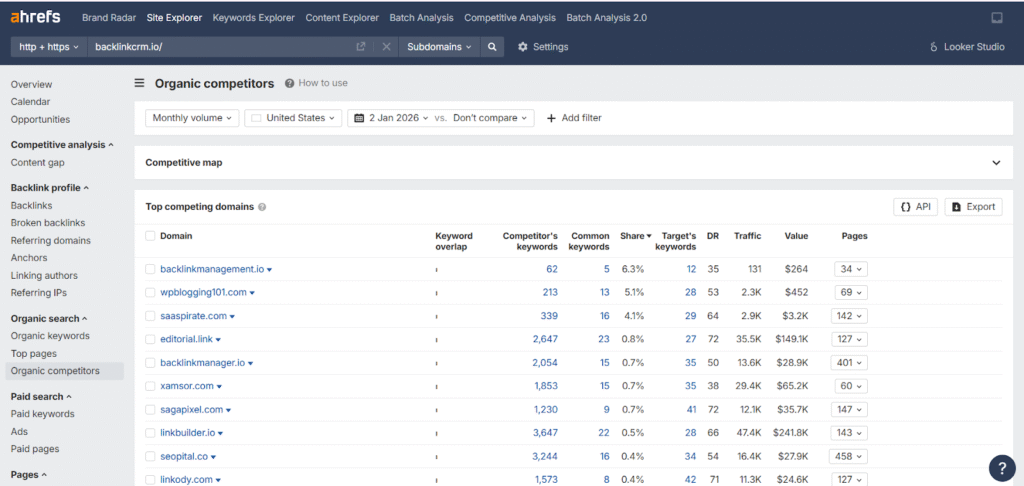
Ahrefs will show you a list of websites that rank for similar keywords like yours across multiple pages and target the same audience as you.
You can get the backlink profile of each of these sites. This competitor analysis will help you understand where these sites are getting links from and will open up more opportunities for strategic backlink building for you.
2. Choose a best Backlink Analysis Tool
To start analysing your competitor’s backlinks, you’ll first need a reliable backlink analysis tool.
We’ve added two backlink tools that will help you get in-depth analysis of your competitor’s backlink profile,
Ahrefs (We primary rely on Ahrefs only)
Ahrefs is one of the best backlink analysis tools for checking competitor backlinks. It has a massive backlink database of over 35 trillion external backlinks, that gives you in-depth insights of your potential competitors backlink profile.
You can use their free “Backlink Checker” tool to get a quick look at your competitor’s backlinks. Just enter a domain to instantly see its domain rating, total backlinks, referring domains, anchor texts, and target URLs.
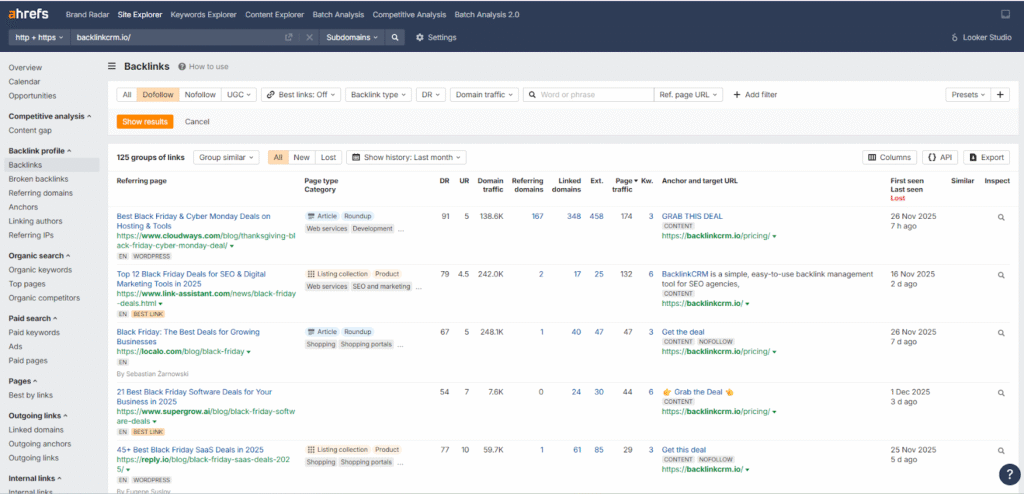
For more detailed analysis, Ahrefs paid “Site Explorer” tool lets you see all backlinks pointing to your competitor’s site. You can apply filters like, Dofollow/Nofollow, Link type, Anchor text, referring domain authority and many more.
SemRush
SEMrush is another powerful tool for competitors’ backlink finding to check both your own and your competitors’ backlinks.
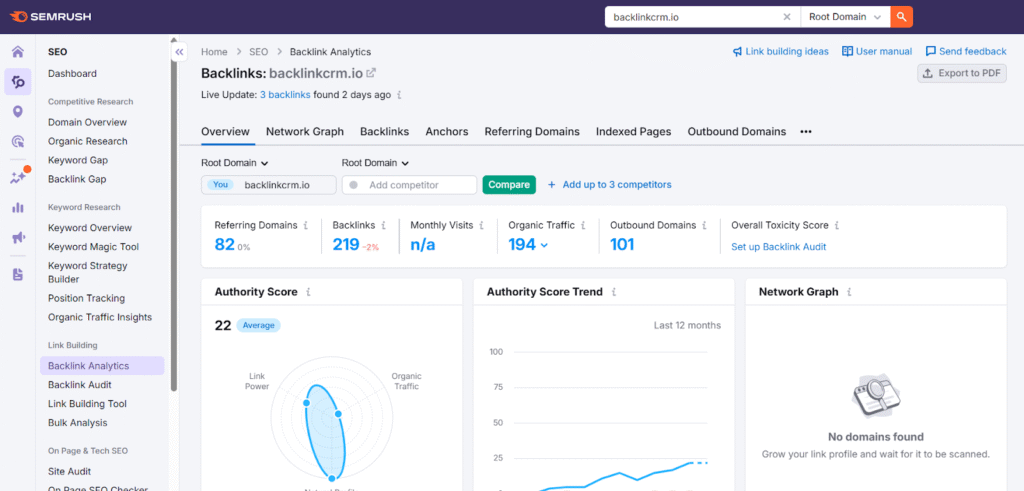
Using SEMrush Backlink Analytics tool, you can easily find the total number of backlinks, referring domains, and dofollow vs. nofollow links.
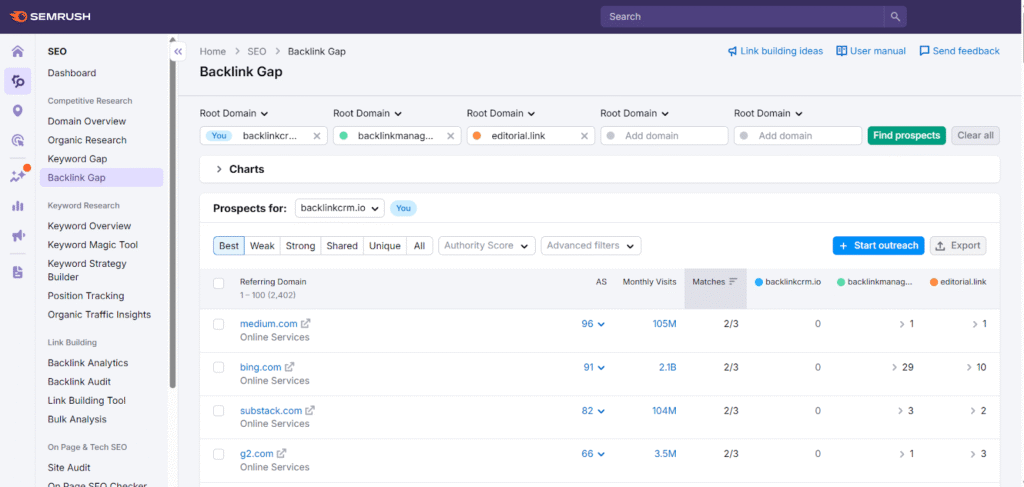
SEMrush also has a useful feature called “Backlink Gap”. With this feature, you can compare your site’s backlink profile with your competitors’ side-by-side. It shows you the domains that are linking to your competitors but not to you, giving you backlink opportunities to explore.
Another important feature is the Toxic Score in the Backlink Audit tool. SEMrush checks each backlink and gives it an Authority score from 0 to 100, helping you spot any potentially harmful or spammy backlinks that might lower your site’s search engine ranking.
Besides these two popular backlink analysis software, you can also explore other backlink analysis tools in the market like,
- MOZ
- SE Ranking
- Ubersuggest
Most of these tools offer similar key features to help with your backlink research, such as:
- Filtering backlinks by type (Dofollow/Nofollow)
- Tracking new and lost backlinks
- Checking which anchor texts are being used
- Identifying referring domains and top-linked pages
3. Understand your competitor’s backlink and content strategy
Don’t just look at the list of links. You need to analyze their seo strategies specifically, what type of backlinks they’re building and how those are added in other websites and blogs.
Break their backlink profile into below categories to plan your link-building strategy:
- Are they focusing on Brand Mentions?
- What to look for: Links that point to their Homepage using their company name as the anchor text.
- The Strategy: Check if these mentions are in “Listicles” (e.g., Top 10 Tools for X). If your competitor is listed there, it’s an open door.
Your Move: Reach out to the editor of the websites linking to your competitors. Don’t just ask to be added – pitch exactly why you are better than the competitor they already featured to earn your spot.
- Are they powering up Specific Feature/Service Pages?
- What to look for: Links going deep into their site (e.g., /features/site-audit or /services/link-building) rather than the homepage.
- The Strategy: These links happen because that specific feature solves the exact pain point the article is discussing. The author isn’t just recommending the brand; they are recommending a specific solution for a specific step.
Your Move: Identify which of their features gets the most links. Does your product solve that specific problem better? Pitch your feature as the more effective solution for that specific part of their guide.
- Which blogs are linking to them?
- Data & Stats: If they get links to “Industry Report” or “Statistics” pages, they are winning with original data. You should run a survey or study to get cited as a source.
- Guest Posts: If links come from author bios on random industry blogs, they are grinding out guest posts. You can replicate this, but it’s high effort.
Note: Also Identify Repeated backlink Sources
Check if the same authority websites or authors are linking to your competitors again and again. This gives you an idea of their link-building relationships with other writers and companies.
4. Replicate your competitor’s high-quality backlinks
Now that you know where your competitors are getting their authority, don’t just stare at the data – steal the strategy.
The logic is simple: If a website has already been linked to your competitor, they have proven they are active in your niche and willing to link out. Here is how to turn those link opportunities into your own backlinks:
- Find the Decision Maker: Don’t waste time with generic “contact@” forms. Use prospecting tools (like Hunter.io or Apollo) to find the personal email address of the Editor or Content Manager. You need to reach the person who actually pushes the “publish” button.
- Win the “Listicle” Spot with Proof: If you find your competitor in a “Top 10 Tools” article, that’s your easiest win. Reach out to the editor and politely suggest your tool as a valuable addition to update their list.
- The Credibility Hack: Don’t just say “we are great.” Provide proof. Mention that you have already been featured by top publications or have a high rating on G2/Capterra.
Script Idea: “I saw you listed [Competitor], but our tool actually solves [Specific Problem] faster. We were recently named a ‘Top Pick’ by [Credible Source], so it might be a great update for your readers.”
- Offer a Backlink Partnership: If it’s not a listicle, don’t just ask for a favor—offer value. Propose a backlink partnership by asking: “Are you open to a collaboration or a link exchange?” offering to feature their content in your upcoming articles or newsletters. This turns a cold pitch into a win-win deal.
Once you start getting “Yes” replies, use BacklinkCRM to keep everything organized. Managing dozens of backlink exchanges in spreadsheets is a nightmare.
Our tool helps you manage all your backlink exchanges at scale—whether it’s a simple 2-way swap or a complex 3-way deal—so you never lose track of who owes you a link.
What more can you do with competitor backlinks?
Finding the opportunities is great, but analyzing the quality of those links prevents you from making mistakes. Use their backlink data to fine-tune and improve your own SEO health.
- Analyze Their Anchor Text Diversification: Don’t blindly build links with “money keywords” (e.g., Best SEO Tool). Look at your competitors’ anchor text ratios. If 80% of their anchors are Branded (e.g., BrandName) or generic (e.g., Click Here), you should mimic that balance. If you over-optimize your anchors when they haven’t, you risk a Google penalty while they stay safe.
- Steal Their Broken Links: This is the “low-hanging fruit” of SEO. Check your competitors’ pages that return a 404 error. If they have high-authority websites linking to those broken pages, reach out to the specific website owner.
The Pitch: “I noticed you’re linking to [Competitor]’s guide, but it looks like the page is dead. I have a live, up-to-date article on the same topic here. It might be a good fix for your readers.”
Conclusion
Finding competitor backlinks isn’t a one-time task; it is an ongoing loop of analysis and action. By using the right tools, you stop guessing what Google wants and start building the exact authority profile that is already winning.
Finally, make sure you monitor your own backlinks just as closely as your competitors’.
If you notice you have lost a backlink—perhaps a partner swapped you out for a competitor or removed your link during an update—don’t let it slide. You already earned that “Yes” once. Reach out to them immediately, ask why the link was removed, and propose a content update or a new value exchange to get it back.
The goal isn’t just to catch up to your competition, but to build a relationship network that keeps you ahead in 2026.
FAQs
1. How often should I perform competitor backlink analysis?
Try to do it once a month. This helps you stay on top of what your competitors are doing without making it a full-time job.
2. How many backlinks do I need to outrank a competitor?
It’s not about the total number; it’s about the quality. A few high-quality backlinks from relevant and trusted websites usually beat hundreds of links from small, not-so relevant blogs.
3. Is it still worth replicating “Nofollow” or “Sponsored” links?
Yes! Even if they don’t boost your rankings directly, they bring real people to your site and make your brand look more professional and natural.
4. Are “Free” backlink checker tools as good as paid ones?
They are fine for a quick look, but they only show you a small part of the picture. Paid backlink tools are much better (if you’ve a budget) for complete backlink profiles of your competitors.
5. What metrics should I look for when analyzing competitor backlinks?
The best things to check are “Relevance” (is the site related to your business?) and ” Keywords and Traffic” (do real people actually visit that site?).
6. What are the most common mistakes to avoid when analyzing competitor’s backlinks?
- Copying low-quality or spammy links
- Building links too fast
- Ignoring the relevance
- Sending generic outreach emails
Read More About:
DA vs DR vs AS: Which is considered as the best authority for backlinks?
8 Best SEO MCP Servers in 2026